


Recent Posts
 Safety Guide for Fuel Tanker Trailer : 4 Key Practics Every Fleet Operator Should FollowJun 24, 2026
- 40ft Skeleton Trailer vs Flatbed Trailer: Which One Is Better for Container Transport?Apr 24, 2026
- How to choose the right material for your first fuel tanker trailerApr 02, 2026
 Why More Customer Choose 4-axle Flatbed Trailer With Front WallMar 27, 2026
- How Much Weight Can a 4-Axle Flatbed Trailer Carry?Mar 17, 2026
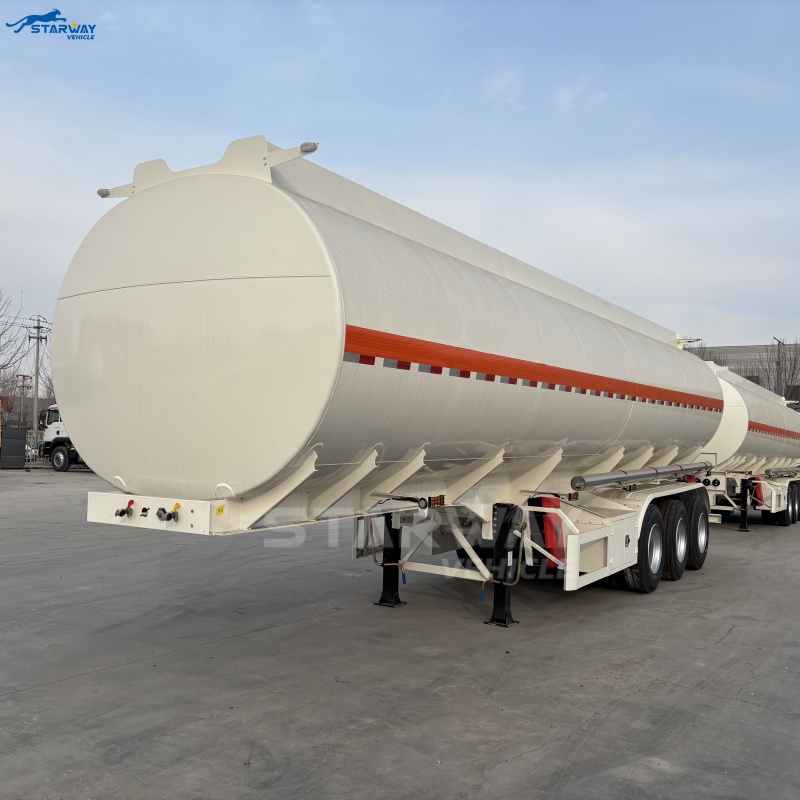
Safety Guide for Fuel Tanker Trailer : 4 Key Practics Every Fleet Operator Should Follow
In fuel transportation.safety is far more than just complicance.It affects everything from driver protection and cargo safety to operating costs and fleet reputation.
Modern tanker trailers are equipped with advanced systems and require less maintenance than before,but techonlogy alone cannot eliminate the risks. Daily operating
habits remain crucial.
Whether you operate a few vehicles for local delivery or manage a fleet of tri-axle tanker trucks for long distance, the following four operating procedures are essential.
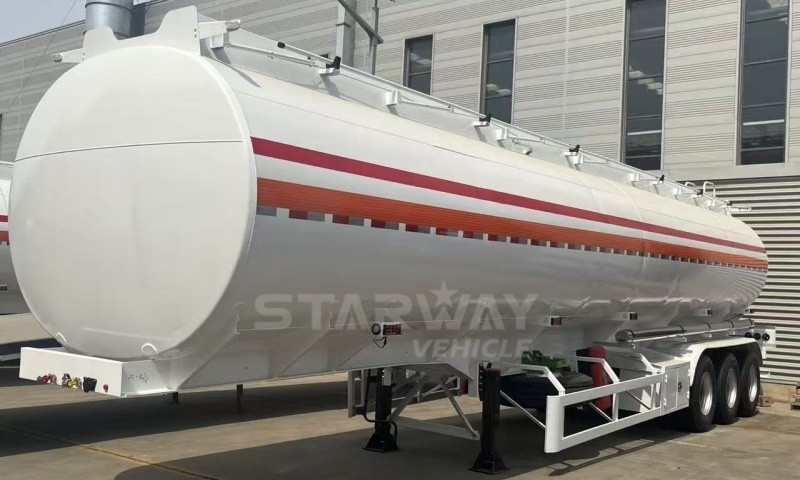
1、 Control fuel level and avoid overloading
Overloading remains one of the most common causes of fuel spills,but it's entirely avoidable.During loading,operators should always
adhere to the designed filling limits and leave enough ullage space in each compartment. This space allows the fuel to expand naturally
when temperatures rise during transportation. If there's not enough room for expansion,the pressure inside the tank will increase significantly.
Furthermore,the risk of spills or leaks increases significantly when liquids move on uneven surfaces.
2、Conduct a thorough leck check before departure
A pre-trip inspection may take only a few minutes,but it can prevent major losses later
Before loading or putting on the road, carefully inspect all sealing components, including:
Discharge valve
Manhole cover
Bottom emergency valve
Pipe connections and gaskets
Never overlook even the smallest leak
Even a small leak should never be ignored.What appears insignificant in the yard can quickly become an environmental issue -or worse,a serious fire hazard.
Features such as vapor recovery systems and anti-overflow devices provide additional protection, but they should be viewed as backups rather than substitutes for
regular inspections.
3、Remove Residual Fuel After Unloading
Many operators assume unloading is complete once the main flow stops. In reality, residual fuel left at the bottom of the compartments can create problems later.
First, remaining product may contaminate the next load, especially when transporting different fuel grades. This affects fuel quality and may lead to customer complaints.
Second, residual fuel gradually evaporates and forms combustible vapors inside the tank. During maintenance or repair work, these vapors can pose a significant safety risk.
For this reason, the tank should be fully drained after every unloading operation. Leaving the compartments completely clean helps maintain both safety and product quality.
4、 Keep the Tank Interior Clean
Regular internal cleaning is just as important as exterior maintenance.
Whenever changing products or preparing for inspections, operators should remove sediment and residual liquids promptly and dispose of them properly. A clean tank helps
maintain fuel purity and reduces the possibility of chemical corrosion over time.More importantly,proper cleaning contributes to a longer service life for the tank body and lowersmaintenance costs in the long run.
Built for Tough Roads: The Starway Advantage
Good operating practices are essential, but reliable equipment matters just as much.
Long-distance routes, heavy loads, and rough road conditions place enormous stress on a tanker trailer. That's why structural strength and manufacturing quality cannot be compromised.
At Starway, we combine practical safety requirements with durable engineering. High-tensile steel and lightweight aluminum materials provide excellent resistance to liquid surge
and road impact, while reinforced chassis structures, heavy-duty suspension systems, and dependable braking components help ensure stable performance under demanding conditions.
The result is straightforward: less downtime, lower maintenance costs, and safer deliveries throughout the life of the trailer.
拉满
Leave A Reply