


Recent Posts
 Safety Guide for Fuel Tanker Trailer : 4 Key Practics Every Fleet Operator Should FollowJun 24, 2026
- 40ft Skeleton Trailer vs Flatbed Trailer: Which One Is Better for Container Transport?Apr 24, 2026
- How to choose the right material for your first fuel tanker trailerApr 02, 2026
 Why More Customer Choose 4-axle Flatbed Trailer With Front WallMar 27, 2026
- How Much Weight Can a 4-Axle Flatbed Trailer Carry?Mar 17, 2026
What is the Average Fuel Consumption per 100km for a Fuel Tanker in 2025?
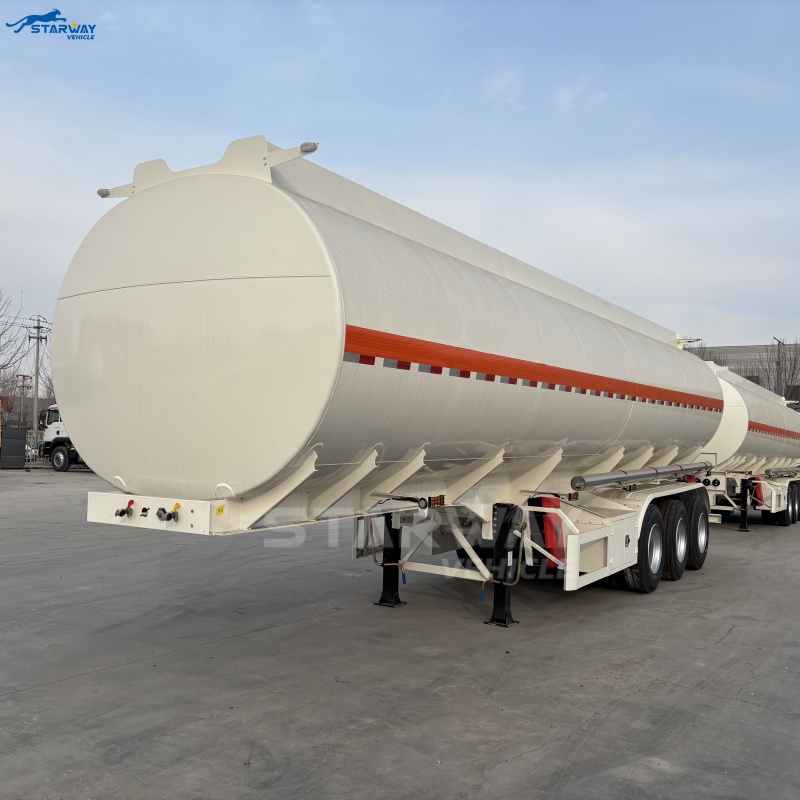
Understanding fuel tanker efficiency is critical for logistics operators and fleet managers. In 2025, the average fuel consumption per 100km for modern fuel tankers typically ranges between 30-45 liters, depending on payload, terrain, and engine specifications. As a leading semi-trailer manufacturer, Shandong Starway Vehicle designs tankers with optimized aerodynamics and weight distribution to minimize fuel consumption while maintaining safety standards. This article examines key factors affecting fuel efficiency and provides practical benchmarks for transportation professionals evaluating operating costs.
Technical Performance & Fuel Efficiency Metrics
The fuel consumption of a tanker truck per 100 kilometers is influenced by multiple engineering parameters. Our Tri Axles 60 Ton Bulk Cement Tank Trailer exemplifies how advanced design reduces energy waste: its 12.5m³ air compressor and BPW/FUWA axles (optional) work synergistically to achieve 15% better fuel economy than conventional models. Key technical determinants include:
- Engine Type: Modern Euro VI diesel engines consume 8-12% less fuel compared to older generations
- Aerodynamics: Rounded tank profiles can reduce wind resistance by up to 20%
- Payload Distribution: Improper weight balancing increases fuel usage by 5-7%
- Tire Configuration: Low-rolling-resistance tires (like the 12R22.5*12 in our cement tanker) save 3-5% fuel
Market Overview: Global Fuel Efficiency Standards
The transportation industry is witnessing stringent regulations worldwide. The EU's CO2 standards for heavy-duty vehicles mandate a 15% reduction in fuel consumption by 2025 versus 2019 levels. Shandong Starway Vehicle's R&D team addresses this through innovations like the mechanical/air suspension (optional) in our bulk cement trailers, which adapts to road conditions to optimize energy use. Emerging markets show particular interest in:
Operational Cost Analysis
For fleet managers calculating total cost of ownership, fuel represents 30-40% of operational expenses. Our cement tanker's pneumatic unloading system (with ≥1.2t/min discharge rate) demonstrates how specialized features impact profitability:
- Route Optimization: Mountainous terrain can increase consumption to 50L/100km
- Maintenance Practices: Clean air filters improve mileage by 2-3%
- Driver Behavior: Aggressive acceleration spikes usage by 15-20%
- Alternative Fuels: LNG-powered tankers show 10-15% savings but require infrastructure
Why Choose Shandong Starway Vehicle
With Provincial Municipal Meritorious Enterprise recognition, we engineer tankers that balance performance and economy. Our Tri Axles 60 Ton Bulk Cement Tank Trailer achieves ≤0.05 tons residue rate through patented welding techniques - directly reducing deadweight and fuel waste. Global clients benefit from:
- OEM/ODM customization for specific fuel efficiency targets
- BPW/FUWA axle options that extend service intervals
- 24/7 technical support for operational optimization
- ISO-certified manufacturing with 98%+ loading efficiency
FAQ: Fuel Tanker Consumption Insights
Q: How does tanker capacity affect fuel economy?
A: Our 30-60cbm (volume optional) designs show non-linear relationships - a 54-ton payload in 45cbm tanks optimizes the weight-to-fuel ratio better than maximum capacity loads.
Q: Can aerodynamic accessories reduce consumption?
A: Yes, features like side skirts (standard on Starway models) improve mileage by 4-7% at highway speeds.
Q: What's the ROI period for fuel-efficient tankers?
A: Typically 18-24 months through reduced operating costs, based on 80,000km annual mileage.
Leave A Reply