


Recent Posts
 How to Choose the Right Flatbed Trailer for 60Ton Cargo TransportationNov 18, 2026
 How to Choose the Right Fuel Tanker Trailer for Your Business?Nov 10, 2026
 Safety Guide for Fuel Tanker Trailer : 4 Key Practics Every Fleet Operator Should FollowJun 24, 2026
- 40ft Skeleton Trailer vs Flatbed Trailer: Which One Is Better for Container Transport?Apr 24, 2026
- How to choose the right material for your first fuel tanker trailerApr 02, 2026

How to Choose the Right Flatbed Trailer for 60Ton Cargo Transportation
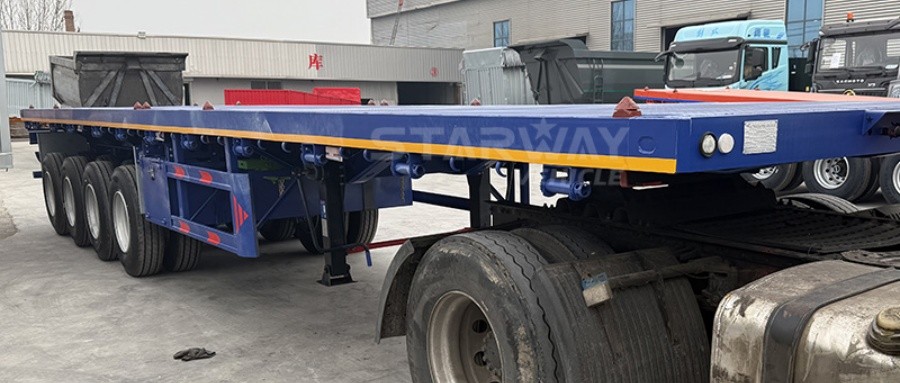
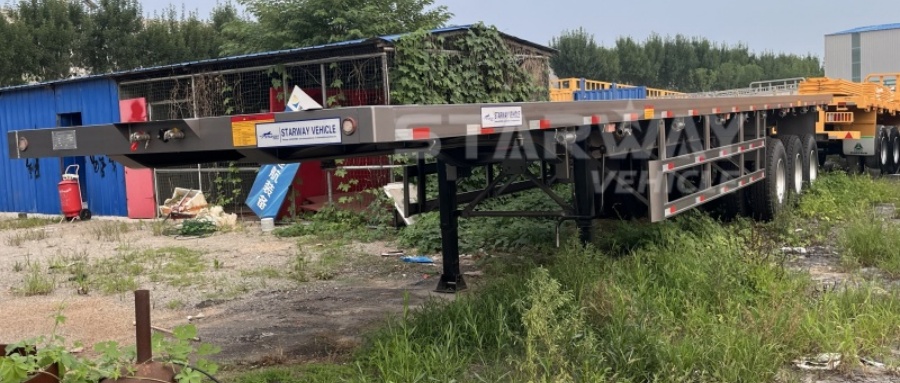
A 50-ton flatbed trailer is built for demanding transport work. It can be transport construction materials, steel structures, heavy machinery,
or 20ft and 40ft shipping containers. Whatever the cargo, the trailer needs to handle heavy loads without compromising stability or road safety.
For transport companies working in Africa,the Middle East,and Latin America,the challenge can be greater. Poor road conditions,long-distance transportation,
high temperatures,and frequent loading and unloading can put extra pressure on the trailers.
Therefore,when choosing a flatbed trailer,one should not only focus on its dimension and noninal payload.The main beam,axle arrangement,suspension,braking
system,and manufacturing qualitu all affextthe performance of a trailer after many years of use.
There are seven important engineering factors to consider before purchasing
1、Main Beam Design
The main beam is one of the most important parts of a heavy-duty flatbed trailer. It supports the cargo weight and transfers the load to the axles. If the beam is
poorly designed, even a trailer fitted with high-quality axles and tires may develop structural problems over time.
Q345B and similar high-strength structural steels are commonly used in trailer manufacturing. However, the steel grade alone does not determine the actual l
oad capacity. Beam height, plate thickness, cross-sectional design, and reinforcement also matter.
When evaluating a 50-ton flatbed trailer, pay attention to these details:
Automatic Submerged Arc Welding (SAW) can help improve welding consistency, particularly along long main beam sections.
A properly designed beam should carry its rated load without permanent deformation. For buyers, this is one of the first things worth discussing with a flatbed trailer manufacturer
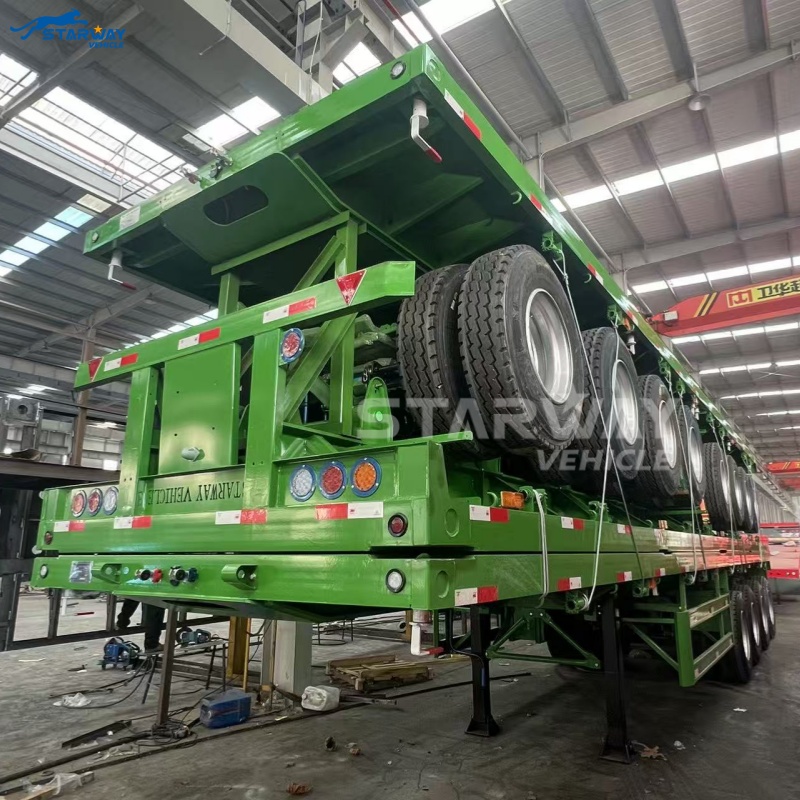
2. Axle Configuration: 3 Axles or 4 Axles?
Should you choose a 3 axle flatbed trailer or a 4 axle flatbed trailer?
The answer depends on your cargo, local road regulations, and transportation conditions. A three-axle configuration is widely used for general heavy-duty transportation,
while four axles may be more suitable for higher loads or markets with stricter axle-weight restrictions.
For a 60-ton transport operation, a three-axle trailer may be sufficient if its structure, axle ratings, and local legal limits allow it.
However, if the trailer regularly operates with heavier cargo or travels on roads with strict axle-load restrictions, a four-axle configuration may be worth considering.
Don't choose the axle arrangement based on price alone. Check the local regulations first, especially bridge weight limits and permitted axle loads.
3、
Suspension Systems: Mechanical or Air Suspension?
Road conditions have a direct impact on trailer performance. A trailer that mainly operates on highways may have different suspension requirements from one
working on construction sites or rough rural roads.
Two common options are mechanical leaf spring suspension and air suspension.
Mechanical Suspension
Mechanical suspension uses multiple steel leaf springs to support the trailer and absorb road impacts. Its structure is relatively simple, making it easier to maintain and repair.
It is a popular choice for heavy-duty flatbed trailers working in remote areas, mining operations, and regions with rough road conditions.
For buyers who prioritize durability and straightforward maintenance, mechanical suspension is often a practical option.
Air Suspension
Air suspension uses airbags and height-control valves to adjust the suspension height and absorb road vibrations.
It provides a smoother ride, which can be useful when transporting sensitive cargo or operating frequently on paved highways. It can also help reduce vibration transferred to the trailer structure.
The right choice depends on where and how often the trailer will operate. There is no need to pay extra for air suspension if your working conditions do not require it.
4. Braking System and Safety Components
A fully loaded 50-ton flatbed trailer carries considerable momentum. Its braking system must respond reliably, especially when driving downhill, on wet roads, or in heavy traffic.
Several components deserve attention:
Relay Emergency Valve: Helps distribute compressed air quickly throughout the braking system, allowing the trailer brakes to respond properly.
Brake Chambers: Spring brake chambers provide service braking and parking or emergency braking functions.
Brake Drums: Heavy-duty brake drums help manage heat generated during repeated braking.
ABS: An optional anti-lock braking system helps prevent wheel lock-up during emergency braking, improving steering control.
Buyers should also check the compatibility of the trailer braking system with their tractor head. Proper installation and testing are just as important as the components themselves.
5. Axles, Tires, and Landing Gear
Apart from the main structure, several smaller components have a major influence on daily operating costs.
Axles
Heavy-duty commercial axles are commonly available in 13-ton, 14-ton, and 16-ton ratings. The correct capacity should be selected according to the trailer's design and intended payload.
Well-matched axles and suspension components help distribute weight more evenly and reduce unnecessary stress on individual parts.
Tires
Tires are in direct contact with the road, so their selection should reflect the operating environment.
For example, 12R22.5 tubeless radial tires are commonly used on heavy-duty semi-trailers. Buyers should also consider tire load ratings, tread patterns, and resistance to heat buildup.
Landing Gear
Landing gear supports the trailer when it is disconnected from the tractor head. Two-speed telescopic landing legs are a common choice for heavy-duty flatbed trailers.
For frequent loading and unloading, stable support legs make daily operation easier and safer.
6. Manufacturing Process and Quality Inspection
Good materials are important, but manufacturing quality determines how well those materials perform as a complete trailer.
When visiting a flatbed trailer factory, it is worth looking beyond the finished product. Pay attention to how the steel is cut, how the beams are welded, and how the chassis is assembled.
The following processes are particularly important:
CNC Plasma Cutting: Provides accurate steel plate dimensions and helps maintain consistency during fabrication.
Automated Welding: Helps maintain uniform weld quality and improves production consistency, especially for long structural components.
Chassis Alignment: Accurate positioning of the kingpin and axle assemblies helps prevent uneven tire wear and trailer tracking problems.
Component Installation: Axles, suspension, braking systems, and electrical components should be installed according to the specified configuration.
Pre-Delivery Inspection: Before shipment, the trailer should be checked for structural defects, air leakage, braking performance, and electrical problems.
A factory inspection can give buyers a better understanding of the manufacturer's actual production capabilities.
It is also a good idea to request manufacturing photos and inspection videos before confirming an order.
7. Surface Treatment and Anti-Corrosion Protection
A flatbed trailer working in coastal areas or tropical climates faces constant exposure to moisture, rain, dust, and sometimes salt air. Without proper surface treatment, rust can gradually affect the steel structure and shorten the trailer's service life.
A standard surface protection process may include the following steps:
Shot Blasting: Removes rust, mill scale, and other contaminants from the steel surface before painting.
Primer Coating: Provides the first layer of protection against corrosion. Zinc-rich epoxy primer is one available option.
Topcoat Painting: Polyurethane paint can provide good weather and UV resistance while maintaining the trailer's appearance.
For trailers operating in coastal regions or humid environments, buyers should ask about the paint system, coating thickness, and surface preparation process.
A good paint finish is not just about appearance. Proper preparation and coating help protect the trailer during years of outdoor use.
Leave A Reply